
General information for everyday care. This guide has not been reviewed by a veterinarian and does not replace advice from your veterinary team.
Before you begin: choose the right job for home
Brushing, wiping paws and a straightforward bath can be manageable at home for many dogs. Tight mats, painful skin, difficult nail trims and complex clipping are different. A professional groomer or veterinarian is the safer choice when the task could hurt the dog or requires tools you cannot use confidently.
Set up before bringing the dog into the space. Use a non-slip surface, good light, suitable dog-grooming tools and treats if they are part of your training plan. Keep the session short enough that you can end on a calm moment.
Step 1: help your dog feel safe with handling
Let the dog inspect the brush. Touch an easy area briefly, reward calm participation and stop. Over several sessions, build from one stroke to a few. Watch for turning away, freezing, lip licking, repeated attempts to leave or a sudden change in posture. These signs mean the dog needs more space or a simpler step.
Do not restrain a frightened dog to prove that grooming must happen. If handling is consistently difficult, ask your veterinarian to rule out pain and seek qualified behaviour or grooming support.
Step 2: brush for the coat in front of you
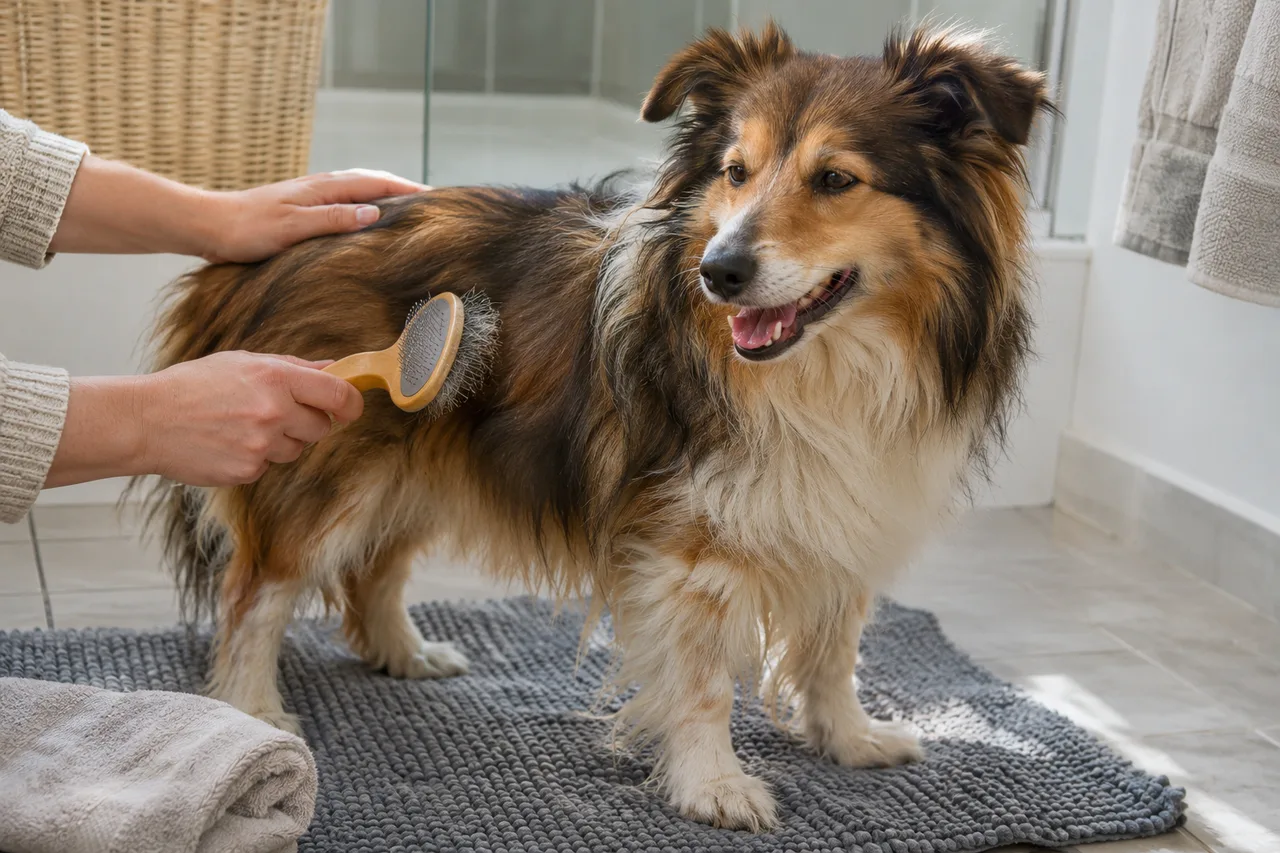
Use a brush or comb suited to the coat and work in the direction the hair lies. Begin where the dog is comfortable, use gentle pressure and check the skin as you go. Regular brushing can remove loose hair and help prevent tangles, but frequency depends on coat type and lifestyle.
Do not pull at a tight mat or cut close to the skin with scissors. Skin can be drawn into a mat and cut easily. A groomer can remove difficult matting with appropriate equipment.
Step 3: bathe only as often as your dog needs
There is no universal bathing schedule. Coat type, skin health, activity and veterinary treatment all affect frequency. Use lukewarm water and a product made for dogs, follow the label, protect eyes and ears from direct product, rinse thoroughly and dry the dog comfortably.
If the dog has persistent itching, odour, redness, flakes, hair loss or sore skin, speak with a veterinarian instead of repeatedly bathing or trying several products. More washing can make some problems worse.
Step 4: know your limits with nails, ears and teeth
Nail trimming can cause pain and bleeding if the quick is cut. Ask a groomer or veterinary professional to demonstrate and stop if you cannot see what you are doing safely. Ear cleaning and dental care also need appropriate products and technique; never insert tools deep into an ear canal or use human toothpaste for a dog.
A sudden objection to touch can signal pain. New lumps, wounds, discharge, strong odour or sensitivity should be assessed rather than hidden under grooming products.
A realistic home grooming schedule
Create a rhythm around the individual dog: a quick coat and skin check during brushing, paw checks after rough or muddy walks, bathing when the coat genuinely needs it, and professional appointments based on coat and nail requirements. Several calm five-minute sessions can be more successful than one long session.
Where Holdable fits
Grooming teaches you the details that make your dog recognisable: the cowlick that never lies flat, the softer fur behind the ears or the way the coat changes around the muzzle. Those observations are useful when choosing reference photos for a Holdable character because they explain what a polished portrait may miss.
Frequently asked questions
How often should I bathe my dog?
It depends on coat, skin, activity and medical needs. Bathe when needed with a dog-appropriate product, and ask your veterinarian or groomer for an individual schedule.
Can I cut mats out of my dog’s coat with scissors?
Do not cut tight mats close to the skin. Skin can be pulled into the mat and injured. Ask a professional groomer for help.
What brush should I use for my dog?
The correct brush depends on coat type and condition. A groomer can recommend a suitable tool and show you how much pressure to use.
Why does my dog suddenly dislike being brushed?
A sudden change can reflect pain, skin irritation or a negative experience. Stop, check for obvious problems and contact a veterinarian if sensitivity persists.
Which photos show coat texture best for a Holdable commission?
Use clear natural-light photos from the front and side, plus a closer image showing important markings and coat texture. Avoid relying only on heavily filtered photos.