
General information for everyday care. This guide has not been reviewed by a veterinarian and does not replace advice from your veterinary team.
Start with the dog, not a generic checklist
A puppy who explores with their mouth, a powerful chewer and a quiet older dog may find different hazards. Walk through each room at nose height and ask what is reachable, interesting, loose or easy to climb. Repeat the check as the dog becomes taller, stronger or more confident.
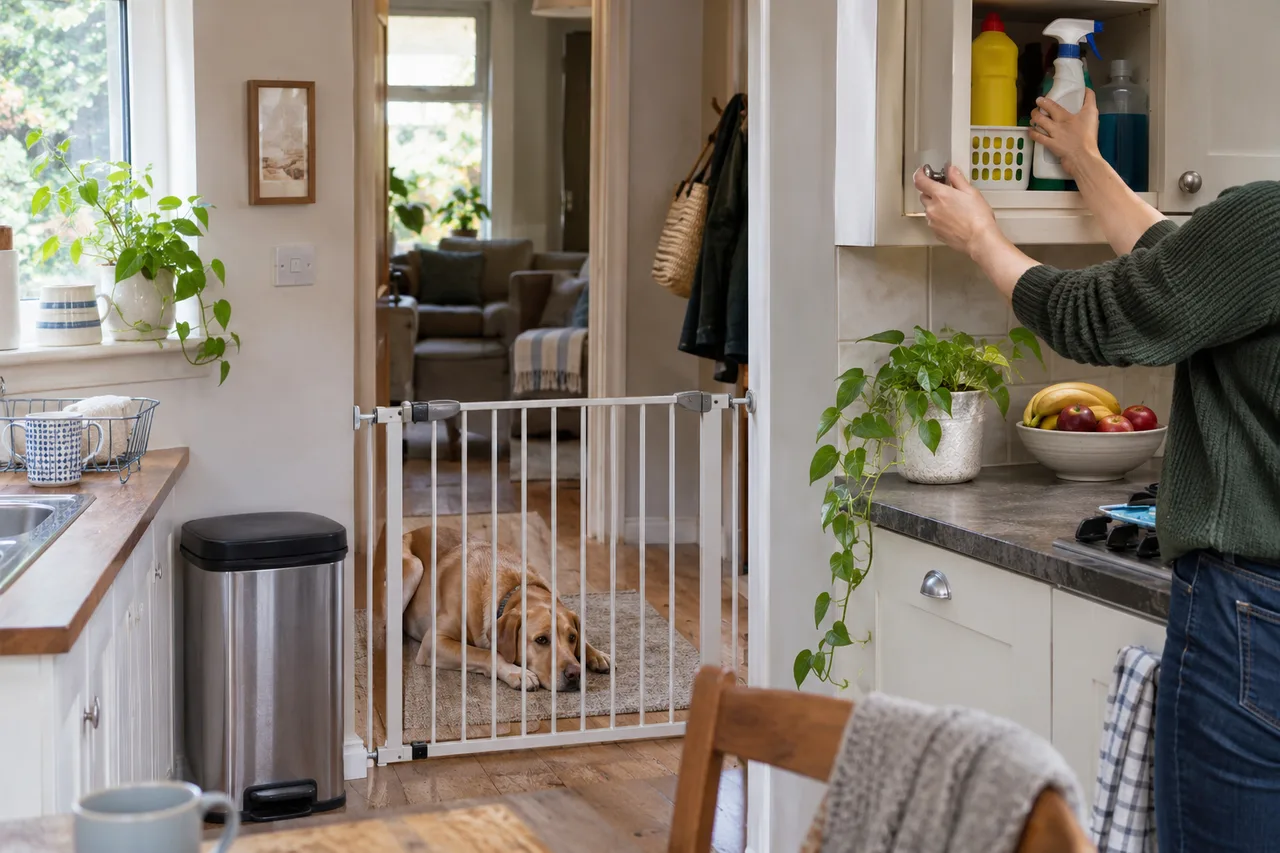
Management is not a substitute for supervision, but it reduces the number of mistakes available. Gates, closed doors, secure bins and cabinet latches can create safer boundaries while the dog learns the household routine.
Kitchen and dining area
Store food, medicines, supplements, cleaning products and pest-control products in secure cabinets. Keep packaging and labels intact. Use a bin the dog cannot open or pull over, clear food from low tables and check the floor after cooking. Many ordinary human foods and household products can harm pets, so contact a veterinarian or animal poison service promptly if you suspect ingestion.
Do not assume a product is safe because it is described as natural. Follow the label and keep the dog away for any required drying or ventilation period.
Living room and bedroom
Secure electrical cords, batteries, small toys, sewing items, jewellery and anything else that could be swallowed. Move breakable objects away from wagging-tail height. Check reclining furniture and sofa beds before closing them, and keep medicines, nicotine products and personal-care items out of reach.
Houseplants deserve their own check. Identify each plant and confirm whether it is suitable around dogs. Move unsafe plants out of the home rather than relying on height alone if leaves can fall or the dog can climb.
Bathroom, laundry, garage and garden
Keep medicines, detergents, cleaners, fertilisers, fuels, paints and pest products securely stored. Close appliance doors and check machines before use. Garages and sheds contain concentrated hazards, so physical separation is more dependable than expecting the dog to ignore them.
Inspect fences and gates, remove sharp objects and check that garden chemicals are used exactly as directed. Supervise around pools and other water. Secure outdoor bins and compost, which may contain spoiled food or items that should not be eaten.
Toys, equipment and the dog’s quiet place
Choose toys for the dog’s size and chewing style, inspect them often and remove damaged items with loose parts. Check that collars, harnesses, leads and fastenings remain in good condition. A safe item can become unsafe after repeated chewing or when a larger dog inherits a small toy.
Create a comfortable resting place away from constant disturbance. Children and visitors should understand that a dog who is eating, sleeping or retreating needs space. Safety includes emotional comfort as well as locked cupboards.
Doors, visitors and shared family routines
Busy arrivals are a common time for doors and gates to be left open. Decide who is responsible for the dog before guests arrive, deliveries are brought in or children leave for school. A gate or closed room can prevent an escape while the front door is active.
Actively supervise children and dogs together. Teach children to avoid climbing on a dog, taking food or toys, or disturbing rest. Step in early when either the child or dog appears uncomfortable.
Where Holdable fits
A safe home makes room for the dog’s ordinary presence: the bed in the corner, the lead by the door and the toy carried from room to room. Those familiar details can become part of a Holdable character story, helping the finished piece feel connected to the home the dog actually shares with you.
Frequently asked questions
What is the first thing to do when dog-proofing a house?
Choose one safe base area, remove reachable hazards and secure doors, bins, medicines, food, cables and cleaning products. Then expand the check room by room.
Is puppy-proofing different from dog-proofing?
The core hazards are similar, but puppies may chew and explore more widely as they grow. Repeat the safety check when their reach, strength and confidence change.
Are baby gates useful for dogs?
Yes, when the gate is secure and appropriate for the dog’s size and behaviour. A gate can separate hazardous or busy areas while preserving visibility.
What should I do if my dog may have eaten something toxic?
Contact a veterinarian or animal poison service promptly. Keep the product packaging if it is safe to do so, and do not induce vomiting unless a professional instructs you.
Can a Holdable character include details from my dog’s home?
Yes. A bed, favourite safe toy or familiar household routine can inspire a small prop, pose or story direction when it suits the product scale.