
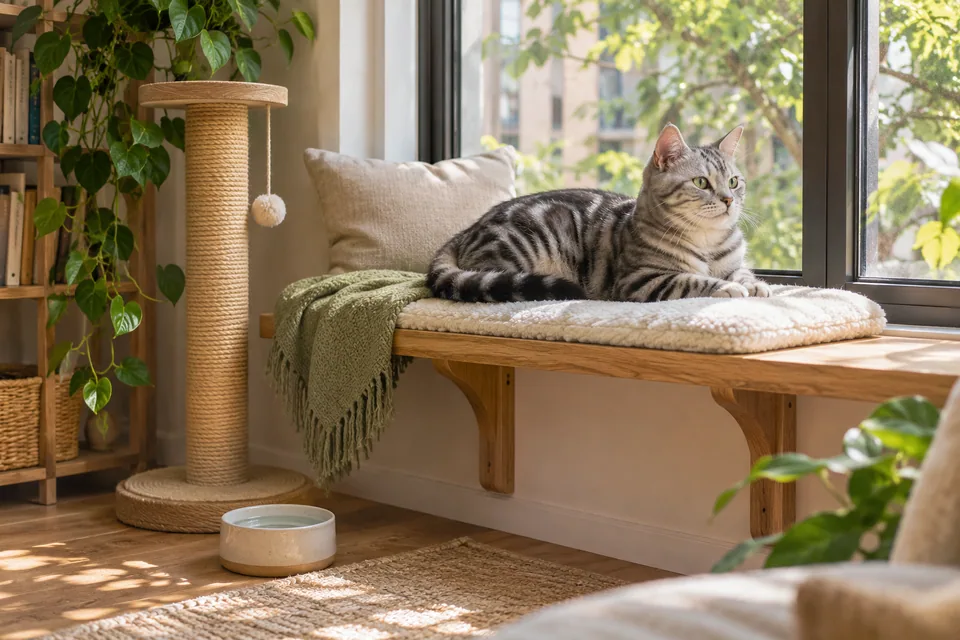
An indoor cat care routine should provide appropriate food, fresh water, clean litter trays, scratching surfaces, hiding and resting places, and regular chances to play. Keep the rhythm predictable while allowing the cat to choose when to interact.
In this guide
General care and training information. This article has not been reviewed by a veterinarian and does not replace an individual veterinary or behaviour assessment.
A cat can have a comfortable sofa and still need a more interesting day. Indoor care is about making ordinary behaviours possible: watching, climbing, scratching, searching, retreating and spending time near you without being handled. A useful routine leaves room for all of them.
This guide is a starting framework for a healthy adult cat. Kittens, older cats and cats with medical conditions need an individual feeding and care plan from their veterinary team.
Start with the layout, then plan the timetable
Walk through your home as if you were a cat moving between resources. Can you reach water without passing the dog? Is a litter tray beside a noisy appliance? Does the only comfortable bed sit in the busiest doorway? A schedule cannot compensate for resources that feel difficult to use.
Spread useful places through the rooms your cat can safely access. Provide sturdy scratching options, accessible resting spots and a place to hide. Secure windows and balconies before offering views. In a multi-cat home, check that one cat cannot quietly control every route to food, water or toileting. Cats Protection’s indoor-cat guidance explains why an indoor environment needs opportunities for natural behaviour.
Morning: refresh, measure and observe
Refresh water and serve a measured portion of a complete food appropriate for your cat’s life stage. Follow the food label and veterinary advice rather than copying another household’s bowl size. Count food used in games within the same daily allowance.
Use breakfast as a low-pressure observation point. Notice whether your cat approaches as usual, chews comfortably and moves normally. Record a meaningful change rather than assuming that hiding, reduced appetite or avoiding a jump is a personality quirk. Contact your veterinarian promptly if your cat stops eating or seems unwell.
Make play something the cat can complete
Offer an interactive toy when your cat is interested. Move it like something worth following: partly behind a box, away from the cat, then briefly still. Let your cat stalk and catch it. Store strings, ribbons and wand toys safely after supervised play; they are not suitable unattended toys.
Keep a small rotation instead of leaving every toy out indefinitely. One day might feature a lightweight ball and a cardboard hiding place; another might use a simple food puzzle. Start puzzles easy enough that the cat can succeed. Cats Protection’s play advice is a useful reference for adapting play to the individual. There is no universal number of minutes that suits every cat.
A sample routine you can adapt
| Part of the day | A practical care opportunity | What to notice |
|---|---|---|
| Morning | Refresh water, measure food, scoop trays | Appetite and usual toileting pattern |
| Before work | Offer a short interactive game | Whether the cat chooses to engage |
| During the day | Leave safe resting, scratching and observation choices | Whether routes remain accessible |
| Evening | Play, feed and share quiet company | Movement, grooming and comfort |
| Before bed | Check trays, water and safe toy storage | Any change worth following up |
This is an example, not a requirement to wake a resting cat for activities. If work patterns change, keep the important resources available and make interaction predictable enough that your cat can settle around it.
Protect the quiet parts of the day
Resting together does not always mean touching. A cat on the other end of the sofa may be choosing your company. Offer a hand or a brief stroke if welcomed, then pause. Let the cat leave. Ask children and visitors to respect hiding places and sleeping spots.
Make small changes one at a time. Moving every bed, tray and bowl during a weekend clean can make the whole environment unfamiliar. A simple household note saying where supplies are and what your cat normally chooses helps another caregiver maintain the routine.
Common gaps to check this week
- A water bowl that is technically full but rarely refreshed.
- A scratching post that wobbles or is too awkward to use comfortably.
- A food puzzle that is so difficult the cat abandons it.
- A favourite high resting place with no easy way down.
- A second cat or dog blocking a quiet route through the home.
For tray placement and cleaning, continue with our cat litter box setup guide. If travel is stressful, practise cat carrier training on ordinary days rather than waiting for the next appointment.
Frequently asked questions
Do indoor cats need play every day?
Regular opportunities for interactive play are useful, but the length and style should suit the cat. Offer a short session, watch their response and allow them to stop.
Should I leave food out all day?
Meal arrangements depend on the food, health needs and household. Measure the daily allowance and ask your veterinary team what feeding pattern suits your cat.
Is a window perch enough enrichment?
A secure view can be one useful option. It does not provide every opportunity for scratching, hiding, movement, play and social choice.
How do I know when a routine needs changing?
Watch what your cat actually uses. Change an inaccessible resource or an activity they find frustrating, and ask a veterinarian about new or persistent behaviour changes.
Can I use the same routine for two cats?
You can share a household rhythm, but each cat needs reliable access to resources and the choice to rest or interact separately. Check for quiet blocking as well as obvious conflict.
Sources
Care principles were checked against these resources on 14 November 2026. The organisations listed have not reviewed or endorsed this article.