
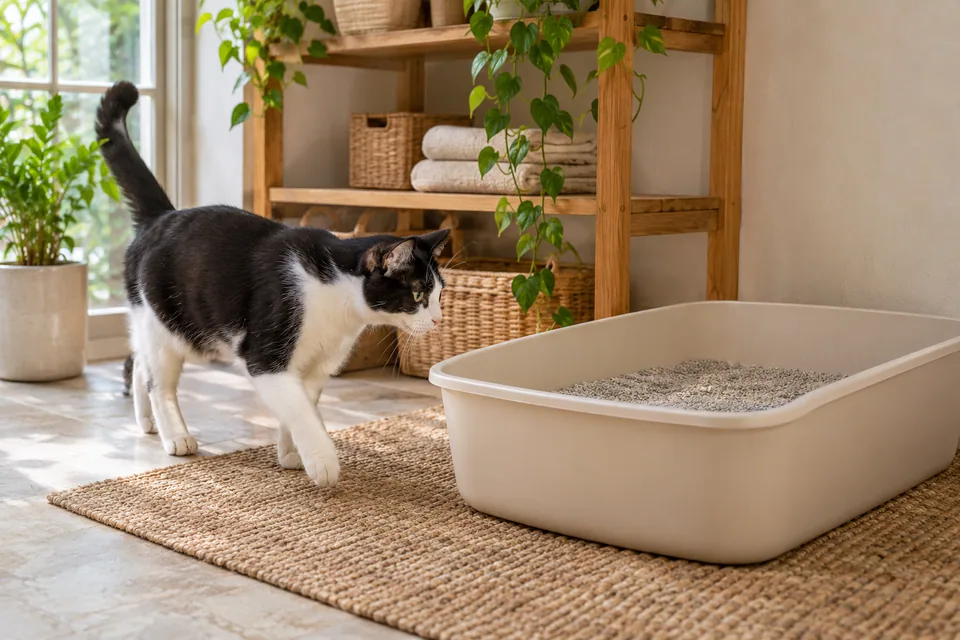
Place litter boxes in quiet, accessible locations where a cat can enter and leave easily. Offer enough separate options, scoop regularly and avoid abrupt changes in litter. New toileting problems need veterinary attention, not punishment.
In this guide
- First, recognise the situation that cannot wait
- Choose locations from the cat’s point of view
- How many litter boxes should you have?
- Match the tray to movement and preferences
- Make cleaning easy enough to maintain
- Troubleshoot the setup without blaming the cat
- Keep the wider home consistent
- Frequently asked questions
General care and training information. This article has not been reviewed by a veterinarian and does not replace an individual veterinary or behaviour assessment.
The best-looking place for a litter tray is not always the place a cat can use comfortably. A tray hidden beside a rumbling washing machine, behind a heavy door or at the end of a hallway guarded by another pet may create a problem before the litter itself enters the picture.
Start with access and choice. Then look at the tray, litter and cleaning routine. This guide addresses the environment; it cannot diagnose why a cat has started toileting outside the box.
First, recognise the situation that cannot wait
If your cat repeatedly strains, passes little or no urine, cries while trying to urinate or appears distressed, seek immediate veterinary attention. Do not wait to see whether a different tray solves it. Cornell’s urinary tract guidance identifies urinary obstruction as a medical emergency.
For other new toileting changes, arrange veterinary advice and describe what you have noticed. Useful information includes timing, whether urine or faeces is involved, changes in drinking, and any difficulty entering the tray. An environmental review can happen alongside medical assessment.
Choose locations from the cat’s point of view
Look for a quiet place with a dependable route in and out. Avoid setting the tray next to food and water, in a cupboard that may be shut, or where a dog can follow the cat into a corner. Consider access at night as well as during the day.
In a home with more than one level, think about the journey rather than the room label. A cat who rests upstairs may find a distant downstairs tray inconvenient, particularly if stairs are uncomfortable. Several trays in one tight cluster do not offer the same choice as separate locations.
How many litter boxes should you have?
A commonly used starting point is one per cat plus an extra, distributed around the home. Treat that as a planning guide rather than proof that every cat will feel comfortable. Watch whether each cat can actually reach and use an option without being watched or blocked.
Make a simple floor-plan sketch. Mark each tray, feeding place, resting place and narrow doorway. If every route passes the same cat’s favourite seat, adding a tray on the other side of the house may be more useful than adding another beside the existing one.
Match the tray to movement and preferences
Choose a tray with enough room for your cat to turn and adopt a comfortable posture. An older cat or one with mobility difficulties may need a lower entrance. Compare open and covered options based on the cat’s response, not only on your wish to hide the tray.
Avoid changing the tray, litter texture, scent and location at the same time. If you need to try something different, offer it as an additional option where possible. Cornell’s house-soiling overview discusses both medical causes and environmental preferences.
Make cleaning easy enough to maintain
Keep the scoop and waste supplies close enough that daily cleaning is realistic, but safely stored away from pets and children. Remove waste regularly and wash the tray using a mild, cat-appropriate approach. Avoid strong fragrances intended to disguise a neglected box.
Assign responsibility when several people share the home. A small tick on a calendar is more reliable than everyone assuming someone else has already scooped. Cleaning also creates a regular chance to notice changes; you do not need to diagnose them yourself.
Troubleshoot the setup without blaming the cat
| What you notice | An environmental question to ask |
|---|---|
| The cat pauses at the doorway | Is another pet blocking or following them? |
| The tray is used only when the house is quiet | Is noise or traffic making access difficult? |
| The cat balances on an edge | Is the tray size, litter or entry uncomfortable? |
| Problems began after a move | Were familiar resources changed all at once? |
| A previously reliable cat stops using the tray | Has veterinary assessment been arranged? |
These questions organise your observations; they do not identify a medical cause. Do not punish accidents or carry the cat to the box as a correction. Clean affected areas with a suitable product and keep a factual record for your veterinarian.
Keep the wider home consistent
Tray use sits within the whole home environment. Rest, food, water, safe routes and social tension matter too. Our indoor cat care routine helps you review the wider layout. When adding a dog, make litter access part of your cat-and-dog introduction plan from the start.
Frequently asked questions
Where should I put a litter box in a small home?
Prioritise quiet access and an easy exit. Use the available layout creatively, but avoid trapping the cat beside noisy equipment or behind a door that may close.
Do two cats need more than one tray?
Yes, provide separate choices. One per cat plus an extra is a common starting point, with placement and each cat’s actual access also important.
Are covered litter boxes always better?
No. Preferences and access vary. A covered box may contain odour for people while feeling cramped or difficult to leave for the cat.
Why has my cat suddenly stopped using the litter box?
Medical problems, discomfort and environmental changes can all be involved. Contact a veterinarian rather than assuming the cat is being difficult.
Can I wait overnight if my cat is straining but not passing urine?
No. Seek immediate veterinary attention. A suspected urinary blockage is an emergency.
Sources
Care principles were checked against these resources on 14 November 2026. The organisations listed have not reviewed or endorsed this article.