
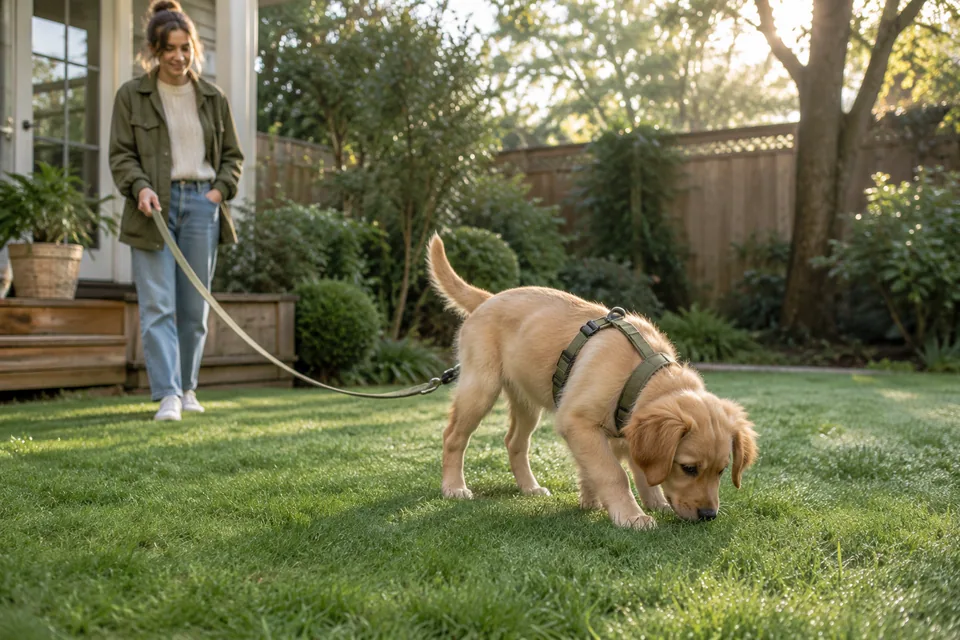
Take your puppy to a suitable toilet area frequently, especially after waking, eating and play. Reward promptly after they finish in the right place, supervise indoors and clean accidents calmly. Adjust opportunities to the individual puppy instead of punishing mistakes.
In this guide
- Set up one easy route before the puppy arrives
- Build breaks around events you can recognise
- Reward the finish, not the journey back to the kitchen
- Use a log to find your own puppy’s pattern
- Handle accidents as information
- Plan nights and absences honestly
- When setbacks need a health check
- Frequently asked questions
General care and training information. This article has not been reviewed by a veterinarian and does not replace an individual veterinary or behaviour assessment.
Toilet training is mostly a problem of opportunity and timing. A puppy needs to reach an appropriate place before the urge becomes an accident, then understand which part of the experience earned a reward. They are also learning a new home, new people and a new daily rhythm.
Expect supervision, interrupted plans and occasional mistakes. A rigid deadline or a rule based only on age cannot account for every puppy’s development, health and previous experience.
Set up one easy route before the puppy arrives
Choose a suitable toilet area and clear the route to it. Keep shoes, lead, bags and rewards where you can reach them quickly. If you live in a flat, include the lift or stairs in your plan rather than assuming that reaching the front door is the whole journey.
Ask your veterinarian how to provide safe toilet access before vaccination protection is complete in your location. A private outdoor area and a shared dog toilet spot carry different considerations. Do not make that decision from a generic internet timetable.
Build breaks around events you can recognise
Offer a toilet opportunity after waking, meals and active play, and frequently between those events. Watch for sniffing, circling, wandering away or abruptly interrupting an activity. Go with the puppy so you can observe and reward the right moment.
PDSA’s toilet-training guidance recommends opportunities linked to waking, eating and play, with rewards and no punishment for accidents. Use your puppy’s pattern to decide when the next opportunity should happen.
Reward the finish, not the journey back to the kitchen
Wait calmly in the chosen area. Let the puppy investigate without turning every break into an exciting game. When they finish toileting, give calm praise and a small suitable reward promptly, while you are still there.
If nothing happens, return indoors under close supervision and try again soon. Avoid immediately giving unrestricted access to the whole home. The aim is to prevent a predictable accident, not to keep the puppy outside until somebody becomes frustrated.
Use a log to find your own puppy’s pattern
| Record | Example of useful detail |
|---|---|
| What happened beforehand | Woke from a nap; finished breakfast; energetic play |
| Time the opportunity was offered | Note when you went out, not only when an accident occurred |
| Result | Urine, faeces or no toilet |
| Indoor supervision | Beside an adult; briefly out of sight; settling in safe area |
| Next adjustment | Offer the next break earlier after this event |
The log is for improving the setup, not scoring the puppy. After several ordinary days, it may show that accidents follow one specific gap in supervision rather than a general failure to learn.
Handle accidents as information
If you find an accident later, clean it with a suitable pet-safe product and review the preceding routine. Punishment does not explain where the puppy should go and can make them avoid toileting near you. Battersea’s house-training guide also emphasises calm, consistent support.
If you notice the puppy beginning to toilet, calmly guide them to the appropriate place if you can do so without frightening them. Do not shout, startle them or rub their nose in a mess. Clean products must be stored out of reach and used according to their directions.
Plan nights and absences honestly
Young puppies may need overnight opportunities. Keep those trips quiet, practical and low in excitement. If a sleeping arrangement makes it impossible to notice the puppy waking, reconsider the setup with an appropriate trainer or veterinary team.
Arrange a caregiver when your absence exceeds what the puppy can currently manage. Restricting water to force longer gaps is not a training solution. If an indoor toilet area is necessary, choose a consistent safe setup and plan the later transition; it may be an extra learning step rather than an instant shortcut.
When setbacks need a health check
Contact your veterinarian about pain, straining, blood, diarrhoea, unusual thirst or a sudden change in a previously established pattern. Frequent unsuccessful attempts to urinate or other signs of acute distress need urgent advice. Do not repeatedly redesign the schedule while overlooking an unwell puppy.
Once the basics are settling, practise tiny pieces of loose-lead walking separately. A toilet trip does not need to become a full training session. Our daily dog care routine can help the rest of the household stay consistent too.
Frequently asked questions
How long does puppy toilet training take?
There is no dependable deadline for every puppy. Development, health, access, supervision and previous experience all influence progress.
Should I punish a puppy for an indoor accident?
No. Clean calmly, review supervision and offer the next opportunity earlier. Punishment can make toileting near you feel unsafe.
Can I toilet train a puppy in a flat?
Yes, but plan for the full journey outside and get veterinary advice about safe access. A consistent indoor option may be needed in some circumstances.
Should I remove water at night to prevent accidents?
Do not restrict access to water as a training shortcut. Ask your veterinarian about any individual medical or care requirements.
What if a trained puppy suddenly starts having accidents again?
Review changes in routine and access, and contact your veterinarian about sudden or persistent changes or any signs of discomfort.
Sources
Care principles were checked against these resources on 14 November 2026. The organisations listed have not reviewed or endorsed this article.